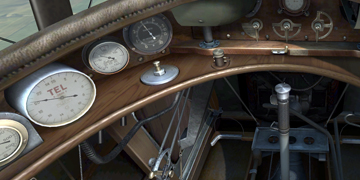
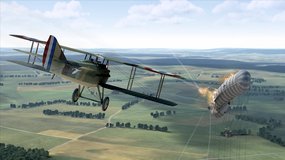
It's easily one of the best flying and best looking games on the market
Yet destiny, like weather, has its own appetite. A messenger came one dusk with tales of a great host marching through the lowlands—men who carried on their shields a pattern once allied with the keep, now turned hostile. They marched under the name of a distant lord who claimed that Caelen’s sword was rightfully his, that the old inheritance was a debt to be collected. It was less a legal argument than a thunderstorm: a force pressing down until the ground gave. Caelen looked at the men who had stayed and felt the pressure of that choice: meet force with force, or bend until there was nothing left to bow.
Legends do not end in a single trumpet. They drip and gather, reshaped by who tells them. Caelen’s story—of choices made between the knife-edge of honor and the softer, harder thing of keeping people alive—found its way into both songs and ledger-keeping. It became part of the geography of a place: a turn in a road, a name on a millstone, a pattern in the stitches of a new banner. No myth says everything. The truth is messier, braided into daily things. But if one seeks a moral in the end, it is this: kingdoms survive not by the fire of single glory but by the patient sewing of promises, by the stubborn refusal to let the common things—bread, bridge, shelter—become coin for war.
A single rider came toward the gate—their horse a coal-silk shape slipping through dusk. The rider’s cloak was the color of stormwater, hood drawn low; when they raised their head, the watchers on the parapet could see for a moment the face of youth and weariness braided together. There was a cut across the cheek, pale as a moon-scar, and eyes that had learned to look two steps deeper than other people’s gazes. pendragon book of sires pdf
Beneath a sky bruised with the slow, breathless hush of evening, the ruined keep crouched like a memory refusing to pass. Ivy laced the crenellations; wind-gnawed banners hung in tatters from rusted pennon-poles. The river below the cliffs moved in a hard, patient line, as if it alone kept time for a world that had forgotten how.
Yet for every hand that reached to join there was an absence. Former allies, who once tied their banners to the keep’s cause, had folded their pacts into pockets and walked away when the ground gave beneath them. Their names were now sung in the low, bitter key of betrayal. Rumor, the ever-prickly weed of human towns, told of other claimants—men who had raised their standards across the sea, princes speaking in smooth-cobbled courtiers’ tongues, knights who wore bright armor like brazen promises. Yet destiny, like weather, has its own appetite
Years later, bards would sing of Caelen’s choice in two modes: those who loved him called him merciful and wise; those who still trafficked in the older language of glory called him a compromiser. Both were true. He had been neither saint nor villain. He had been a person given a sword, given a history, tasked with keeping the small currencies that let a world keep going.
He chose a third way.
The commander, an iron-eyed woman named Maelsa, agreed to meet by the halfway bridge under an oak split by lightning. She wore no crown, but her presence had a neat brutality about it. They spoke not of glory but of logistics: where grain would move, who would keep the ferries, how to guarantee safe passage for traders. It was not romance; it was accountancy under threat. In watching her negotiate, Caelen saw a kinship: Maelsa, too, measured the world by what could be sustained across seasons.