SPEECHTEXTER
...

Windows 7 Super Lite By R-almodaris -

A Comprehensive Review of "Windows 7 Super Lite by R-Almodaris"

In the realm of operating systems, Windows 7 has been a stalwart, cherished for its balance of usability, performance, and compatibility. However, with the advent of newer operating systems and the increasing demand for lightweight, efficient software, modified versions of classic operating systems have gained popularity. One such iteration is "Windows 7 Super Lite by R-Almodaris," a customized version of Windows 7 designed to offer the robustness of Windows 7 with a lighter footprint. This paper aims to provide an in-depth analysis of this modified operating system, exploring its features, benefits, potential drawbacks, and implications for users and the broader computing community. windows 7 super lite by r-almodaris

Windows 7, released by Microsoft in 2009, quickly became a favorite among users due to its intuitive interface, improved performance over its predecessor Windows Vista, and compatibility with a wide range of software and hardware. Despite its popularity, as technology evolved, the desire for operating systems that could run efficiently on lower-spec hardware or provide a more streamlined experience led to the development of lightweight versions of popular OSes. "Windows 7 Super Lite by R-Almodaris" is one such project, likely aimed at revitalizing the life of older hardware and providing users with a fast, efficient, and perhaps more secure version of Windows 7. A Comprehensive Review of "Windows 7 Super Lite

SpeechTexter is a free multilingual speech-to-text application aimed at assisting you with transcription of notes, documents, books, reports or blog posts by using your voice. This app also features a customizable voice commands list, allowing users to add punctuation marks, frequently used phrases, and some app actions (undo, redo, make a new paragraph).

SpeechTexter is used daily by students, teachers, writers, bloggers around the world.

It will assist you in minimizing your writing efforts significantly.

Voice-to-text software is exceptionally valuable for people who have difficulty using their hands due to trauma, people with dyslexia or disabilities that limit the use of conventional input devices. Speech to text technology can also be used to improve accessibility for those with hearing impairments, as it can convert speech into text.

It can also be used as a tool for learning a proper pronunciation of words in the foreign language, in addition to helping a person develop fluency with their speaking skills.
using speechtexter to dictate a text

Accuracy levels higher than 90% should be expected. It varies depending on the language and the speaker.

No download, installation or registration is required. Just click the microphone button and start dictating.

Speech to text technology is quickly becoming an essential tool for those looking to save time and increase their productivity.
Features

Powerful real-time continuous speech recognition

Creation of text notes, emails, blog posts, reports and more.

Custom voice commands

More than 70 languages supported

Technology

SpeechTexter is using Google Speech recognition to convert the speech into text in real-time. This technology is supported by Chrome browser (for desktop) and some browsers on Android OS. Other browsers have not implemented speech recognition yet.

Note: iPhones and iPads are not supported

List of supported languages:

Afrikaans, Albanian, Amharic, Arabic, Armenian, Azerbaijani, Basque, Bengali, Bosnian, Bulgarian, Burmese, Catalan, Chinese (Mandarin, Cantonese), Croatian, Czech, Danish, Dutch, English, Estonian, Filipino, Finnish, French, Galician, Georgian, German, Greek, Gujarati, Hebrew, Hindi, Hungarian, Icelandic, Indonesian, Italian, Japanese, Javanese, Kannada, Kazakh, Khmer, Kinyarwanda, Korean, Lao, Latvian, Lithuanian, Macedonian, Malay, Malayalam, Marathi, Mongolian, Nepali, Norwegian Bokmål, Persian, Polish, Portuguese, Punjabi, Romanian, Russian, Serbian, Sinhala, Slovak, Slovenian, Southern Sotho, Spanish, Sundanese, Swahili, Swati, Swedish, Tamil, Telugu, Thai, Tsonga, Tswana, Turkish, Ukrainian, Urdu, Uzbek, Venda, Vietnamese, Xhosa, Zulu.

Instructions for web app on desktop (Windows, Mac, Linux OS)


Requirements: the latest version of the Google Chrome [↗] browser (other browsers are not supported).

1. Connect a high-quality microphone to your computer.

2. Make sure your microphone is set as the default recording device on your browser.

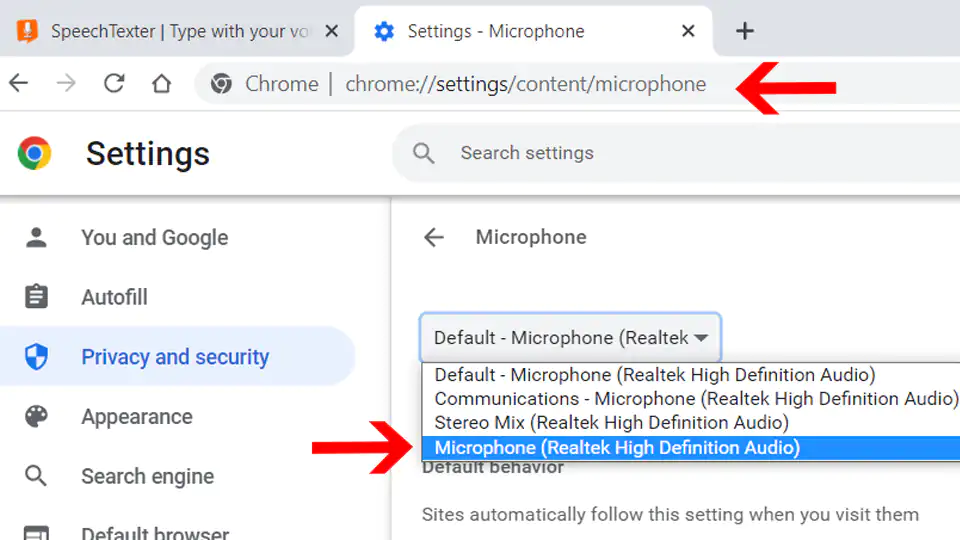
To go directly to microphone's settings paste the line below into Chrome's URL bar.

chrome://settings/content/microphone


Set microphone as default recording device

To capture speech from video/audio content on the web or from a file stored on your device, select 'Stereo Mix' as the default audio input.

3. Select the language you would like to speak (Click the button on the top right corner).

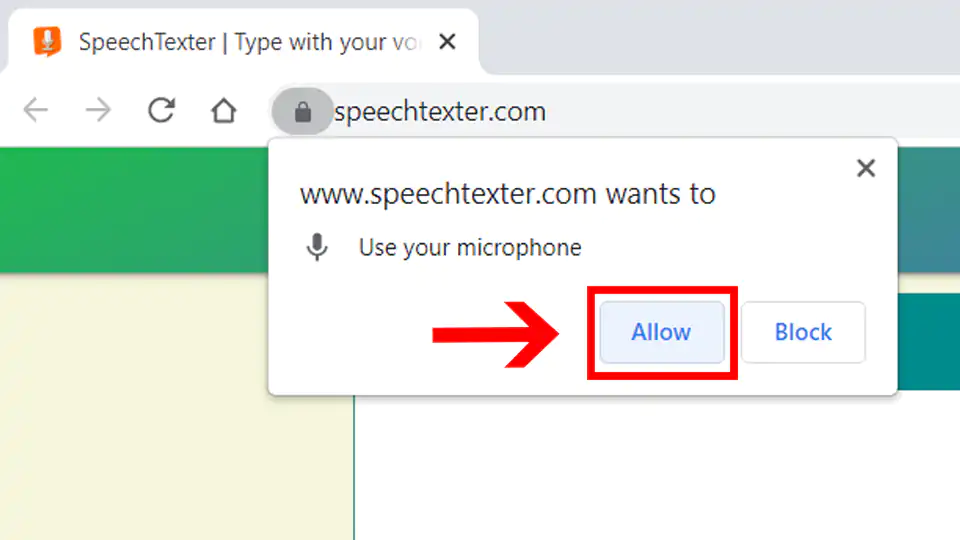
4. Click the "microphone" button. Chrome browser will request your permission to access your microphone. Choose "allow".

Allow microphone access

5. You can start dictating!

Instructions for the web app on a mobile and for the android app (the android app is no longer supported)


Requirements:
- Google app [↗] installed on your Android device.
- Any of the supported browsers if you choose to use the web app.

Supported android browsers (not a full list):
Chrome browser (recommended), Edge, Opera, Brave, Vivaldi.

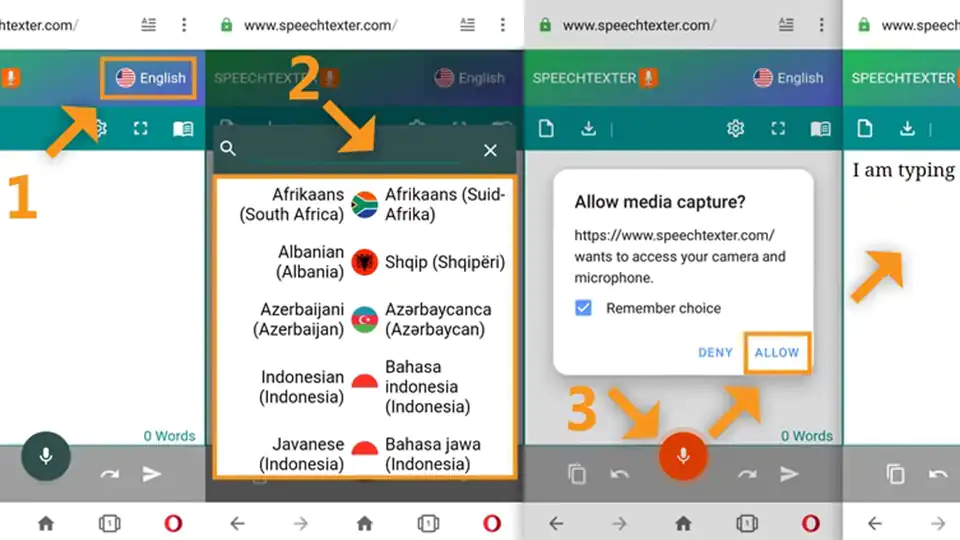
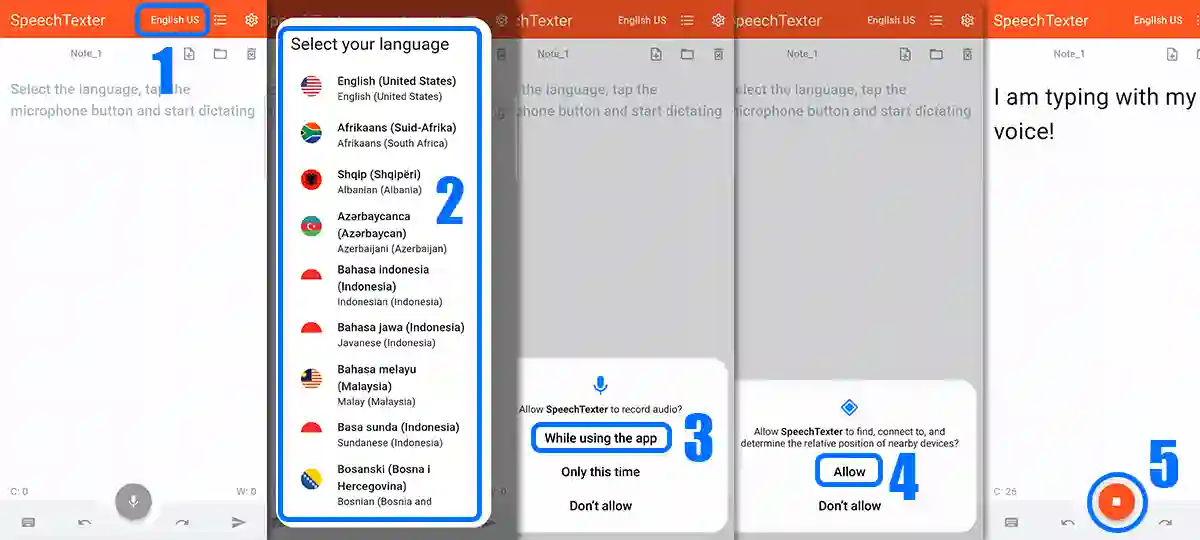
1. Tap the button with the language name (on a web app) or language code (on android app) on the top right corner to select your language.

2. Tap the microphone button. The SpeechTexter app will ask for permission to record audio. Choose 'allow' to enable microphone access.

instructions for the web app
web app

instructions for the android app
android app

3. You can start dictating!

A Comprehensive Review of "Windows 7 Super Lite by R-Almodaris"

In the realm of operating systems, Windows 7 has been a stalwart, cherished for its balance of usability, performance, and compatibility. However, with the advent of newer operating systems and the increasing demand for lightweight, efficient software, modified versions of classic operating systems have gained popularity. One such iteration is "Windows 7 Super Lite by R-Almodaris," a customized version of Windows 7 designed to offer the robustness of Windows 7 with a lighter footprint. This paper aims to provide an in-depth analysis of this modified operating system, exploring its features, benefits, potential drawbacks, and implications for users and the broader computing community.

Windows 7, released by Microsoft in 2009, quickly became a favorite among users due to its intuitive interface, improved performance over its predecessor Windows Vista, and compatibility with a wide range of software and hardware. Despite its popularity, as technology evolved, the desire for operating systems that could run efficiently on lower-spec hardware or provide a more streamlined experience led to the development of lightweight versions of popular OSes. "Windows 7 Super Lite by R-Almodaris" is one such project, likely aimed at revitalizing the life of older hardware and providing users with a fast, efficient, and perhaps more secure version of Windows 7.