
Xfadsk2016x64 Updated Apr 2026
Installing the Remote Print Driver and registering a printer - Windows
 |
Download Remote Print Driver from the following URL: https://support.epson.net/rpdriver/win/
|
 |
Double-click “Setup.exe” of Remote Print Driver.
|
 |
Select EPSON Remote Print, and then click OK.
|
 |
Read the license agreement, select Agree, and then click OK.
|
 |
Enter the printer’s email address.
|
 Note:
Note:|
You can check the printer’s email address using one of the following methods.
From the information sheet printed when you completed the Epson Connect setup.
From the notification email sent when you completed the Epson Connect setup.
From the printer's network status sheet.
From the network status on the printer's control panel.
From the printer list on the Epson Connect User Page.
If you are not the owner of the printer and you do not know the printer’s email address, contact the owner of the printer.
|
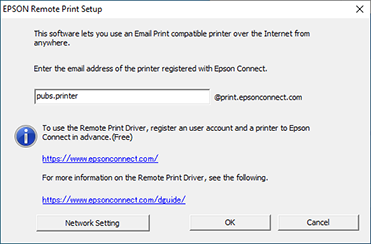
 |
Click OK.
|
Note:|
If an access key has been set, the access key entry screen is displayed. Enter the key, and then click OK.
If you do not know the access key, contact the owner of the printer.
|

Installing the Remote Print Driver and registering a printer - Mac OS X
|
Download Remote Print Driver from the following URL: https://support.epson.net/rpdriver/mac/
|
|
Select Applications > Epson Software, and then double-click Epson Remote Print Utility.
|
|
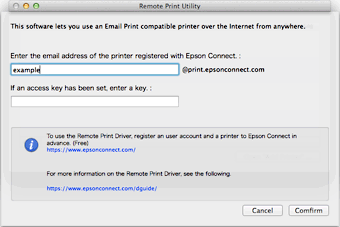
Enter the printer's email address.
|
Note:Xfadsk2016x64 Updated Apr 2026
At Vantage, the update became a tool and a concern. Clients cheered at recovered deliverables, but privacy questions surfaced. Models sometimes contained embedded personal details—addresses, hand-written notes scanned into reference layers, the name of a vanished supplier. One client found the first drafts of a logo they had abandoned after a bitter split with a partner. The recovered files reopened old disputes. Vantage’s legal team drafted a cautionary policy: we can assist with art recovery, but restored content may contain legacy data.
Vantage adapted. They created a workflow: recovered artifacts went into a quarantined archive, flagged and cataloged. A small team—ethicists, engineers, and local historians—reviewed items and reached out to affected people. The process was imperfect, slow, and sometimes painful, but it intentionally set human contact as the arbiter of restored meaning. xfadsk2016x64 updated
Her search eventually led her to a small woman in a café on the edge of town. Tomas’s sister, Sofia, who kept a stall selling hand-made brooches. She watched Mira over the rim of a chipped mug, eyes wary and kind. Sofia told a tale in fragments: Tomas was generous, she said. They'd grown up in the neighborhood that lost its hall. He had worked on projects for local firms, always folding in the quiet histories of the places he rendered—little marginalia, names of people who had swept floors or run a café. He believed models should remember the people who made them. At Vantage, the update became a tool and a concern
She drove there the next morning. The riverbank had been reclaimed by reeds and the remains of old concrete foundations—statues of past plans. At low tide she found a rusted tin, half-buried, containing a trove of polaroids: a group smiling at a holiday table, a man with paint on his hands—Tomas—and, tucked beneath the photos, a folded paper. It was a flyer for a "Rebirth" event, dated 2003. Inside, in shaky handwriting, was a map drawn in outline: routes to the center, names of volunteers, and a list of things to be repaired. Someone had evidently planned to rebuild the hall, but the event never happened. One client found the first drafts of a
|
Click Confirm.
|
|
Click Open "Add Printer" ... and then add the registered printer.
|
Note:|
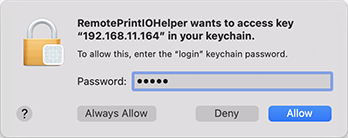
If you are using an authenticated proxy environment, the following screen may be displayed when printing.
In this situation, enter your computer login password, and then click [Always Allow] or [Allow].
 |